
Standby Generators & Transfer Switches
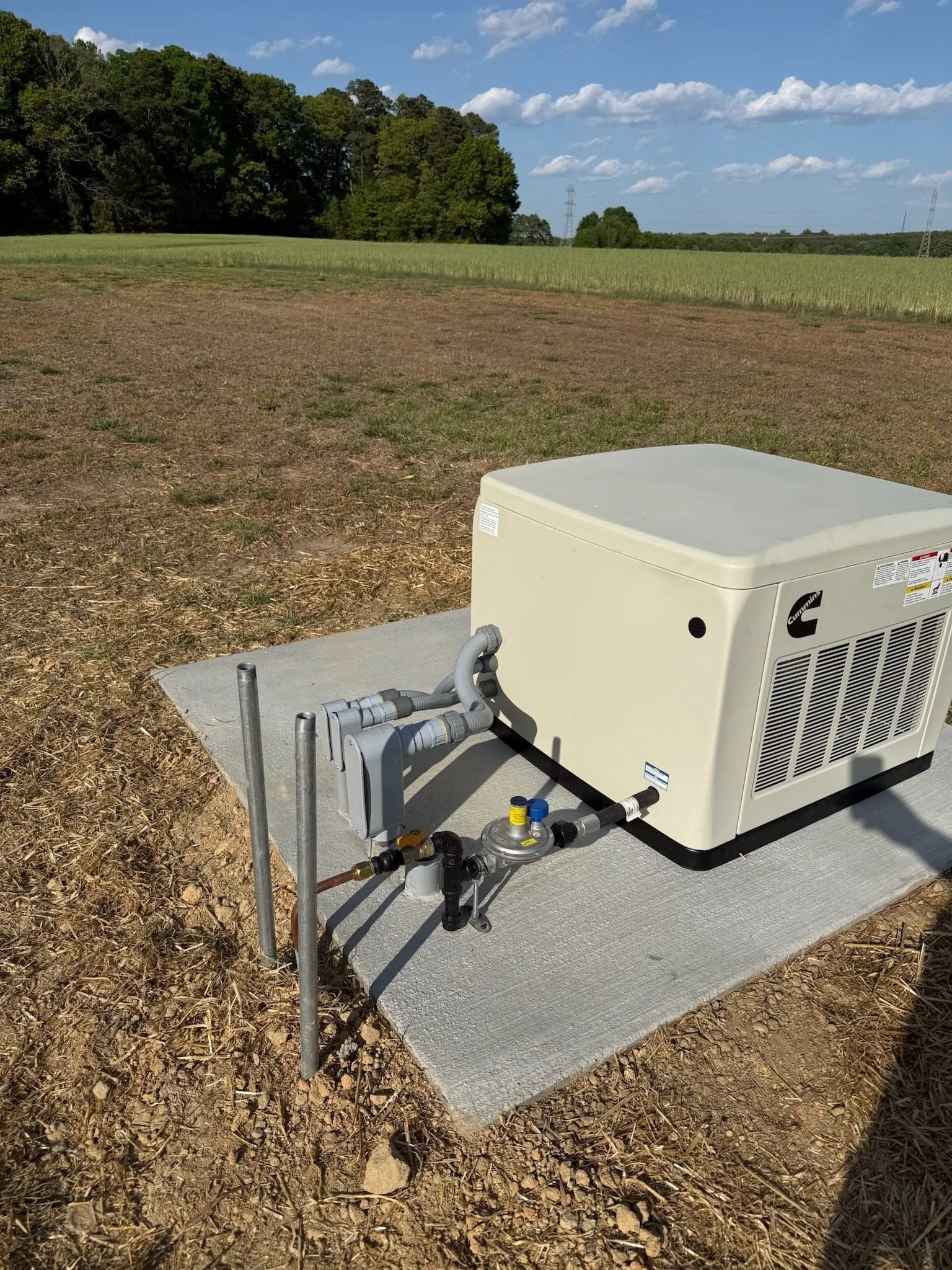
A standby generator that starts itself and monitors its own condition is closer to a small control system than to ordinary house wiring.
More than wiring
Most house wiring is switches, lights and appliance circuits. A standby generator adds an automatic start and monitoring functions on top of the power wiring, and those are control systems. Nathan spent years on industrial control systems in chemical plants and power plants, and that background carries straight over to a generator install.
Why people put one in
In the Piedmont, ice storms take the power out, sometimes for a few days. A standby generator with enough fuel keeps the important things in the house running until power is restored.
For some people it’s more than convenience. If someone in the house depends on medical equipment that runs on electricity, a standby generator keeps it running through a long outage. Businesses with systems that can’t go down need the same thing, and for small and medium businesses we can add battery backup to carry the load in the seconds before the generator takes over.
How an automatic system works
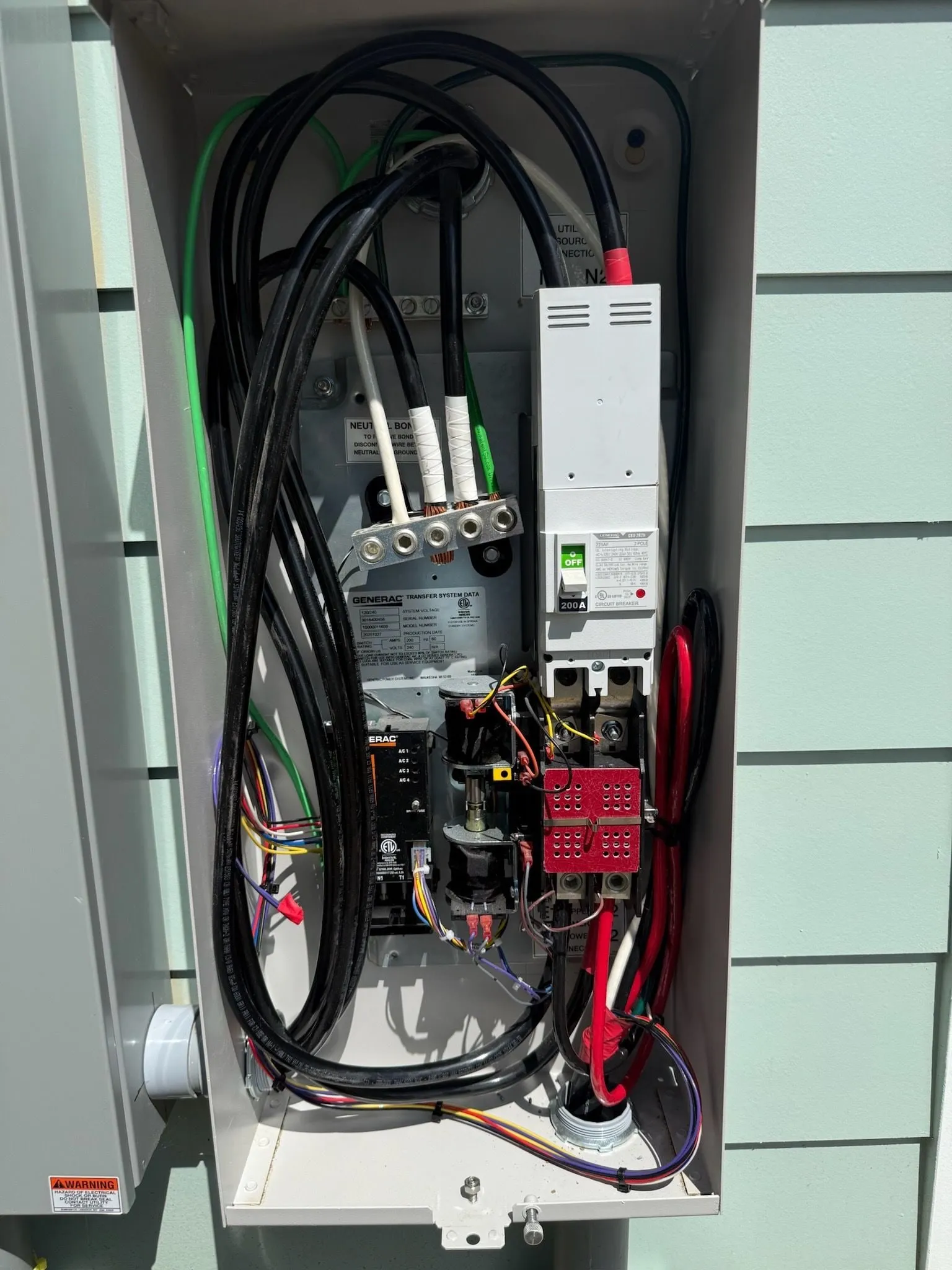
The automatic transfer switch watches the power coming from the utility. When it drops out, the switch waits a set time, such as 30 or 45 seconds, because the power often comes right back. If it doesn’t, the switch starts the generator and moves the house over to it.
When the utility power returns and stays on for a set time, the switch moves the house back and the generator runs a cool-down before it shuts itself off, ready for the next time. Once a week it starts itself and runs for about 10 minutes to keep itself ready.
Standby or portable
A portable generator can power a house too, through a generator input and an interlock. The generator plugs into an outdoor receptacle. You turn off the main breaker and slide a plate over it, which lets you turn on the generator breaker. The plate makes it impossible to have both on at once, so the house takes power from the utility or the generator, never both.
It works, but every outage means hauling the generator out, plugging it in, sliding the plate and starting it. A standby unit does all of that on its own. Standby units also come larger: the air-cooled ones we install go up to about 20 to 22 kilowatts, far more than anything you’d roll around on wheels. Which one is right usually comes down to budget, how much you want to run, and whether you can handle a portable yourself when the power goes out.
What can I run?
That’s the question almost everyone asks, and the honest answer is: what do you want to run? The electrical code says a generator has to be big enough for the load it carries, or have a way to shed load. So we sit down with you and work out what matters most, then size the generator to fit that and your budget.
Load shedding helps a smaller generator do more. If a house has four air-conditioning units, we can wire a load-shed module to each, and the system drops the least important ones first to keep the generator from overloading. With a big enough budget, you can power just about anything.
Generac and other brands
Nathan is a certified Generac installer, trained by Generac, and we can supply the whole system. On a new house on Hyco Lake, we sold and installed a Generac generator and transfer switch as part of wiring the house.
We also install equipment you buy yourself. On one job the customer supplied an Onan generator, and we did the rest. Both jobs went smoothly. The two brands start and control the generator a little differently, but Nathan wouldn’t call either one better.
How long it takes
Usually about three days. On a house that already has power, the transfer switch goes between the utility and your panel, so the power company has to shut the power off while we connect it. We do as much of the work as we can beforehand, so the outage itself is 8 to 12 hours.
A generator install is almost a new construction job, and new construction is the work we enjoy most.
Maintenance
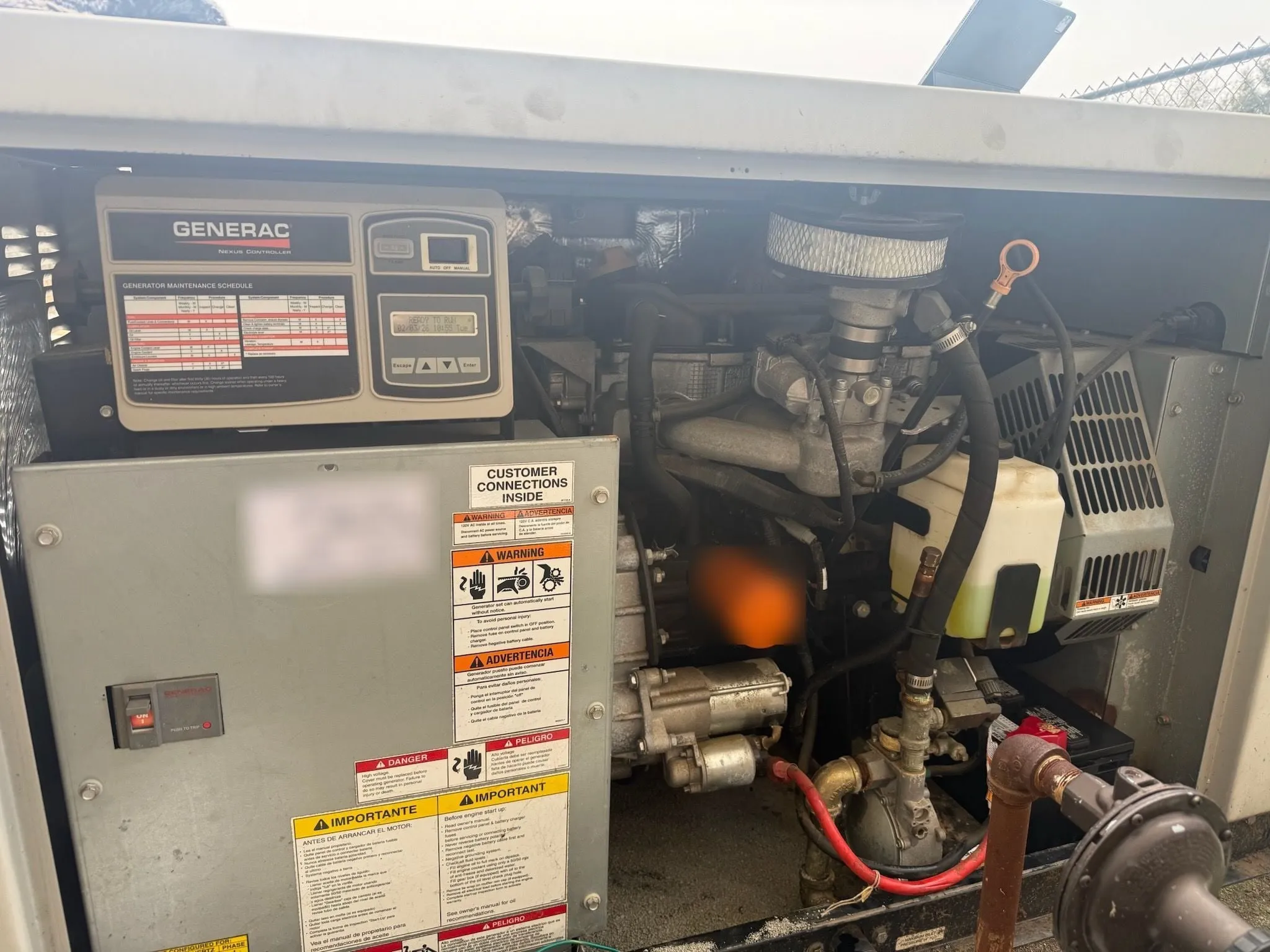
We also offer annual maintenance: new spark plugs, air filter and oil, and a look at the records from the generator’s weekly test runs, so it’s ready when the next storm comes.
Permits and inspections
We pull the permit and handle the paperwork, for a fee on top of what the county or town charges for the permit itself. Our North Carolina unlimited license lets us pull permits in any county or town in the state that requires one. We’re at the inspection ourselves, so if the inspector wants something changed, we can usually correct it on the spot and pass.
From our Google reviews
“Great experience with Nathan from Morgan Electric, will definitely use him again! Got panel upgrade, RV port, and generator input.”
“Nathan did an outstanding job with our generator install. These projects are rarely low-stress, but he handled everything so smoothly that he actually made the process enjoyable.”
Other work we do
- Panel UpgradesElectrical panel upgrades and replacements.
- EV ChargersElectric vehicle charger installation.
- RV PortsRV power hookup installation.
- LightingIndoor, outdoor and commercial lighting, including recessed and color-adjustable LED fixtures.
- Smart Home WiringVideo doorbells, security cameras, smart switches, dimmers and thermostats, smart blinds and network cable, and help setting up the apps.
- New Construction WiringElectrical for new homes and outbuildings, from planning the service to the final inspection.
- Troubleshooting & RepairsTroubleshooting, repairs and preventive maintenance, including service entrance and incoming power diagnostics.
- Electrical InspectionsElectrical inspections for home buyers and hazard surveys for businesses, with infrared scanning.
- Commercial ElectricalElectrical work for businesses and offices, including tenant build-outs.
- Industrial & Motor ControlsLight industrial electrical work, machinery moves, and motor control troubleshooting.
Get a quote
The fastest way is to call. Or send a few details and we’ll get back to you, usually within 4 to 6 hours.
336-990-2332