
Panel Upgrades
Hardly anyone calls asking for a panel upgrade. It comes up when they call about something else, like an EV charger or power for a new shop, and the numbers show the panel can’t carry it.
One upgrade, start to finish
A customer called because the handle on his main breaker had broken. The panel was outside, and years of weather had worn it down so badly that the handle was in the off position while the circuit was still energized. That alone meant replacing it.
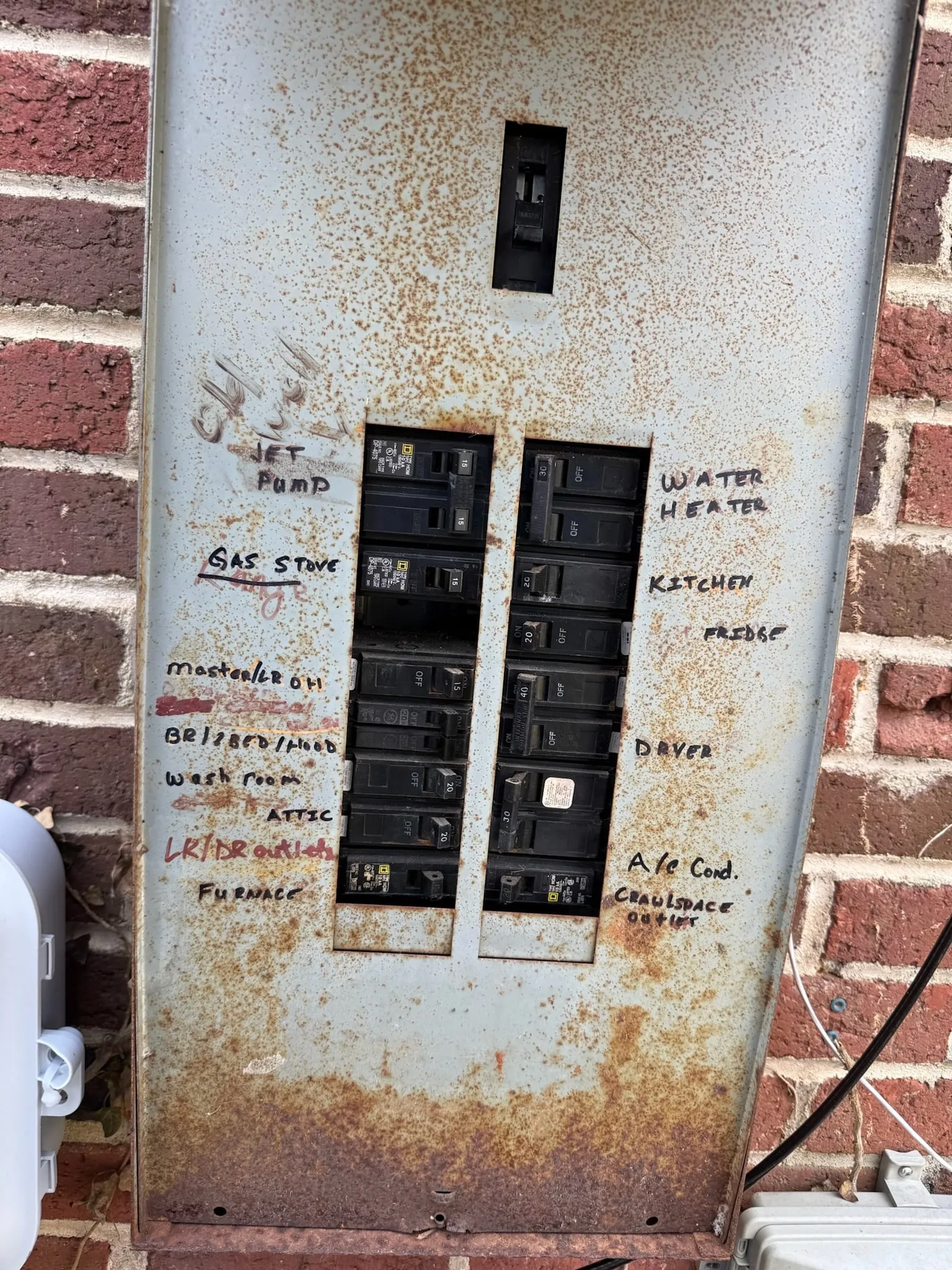
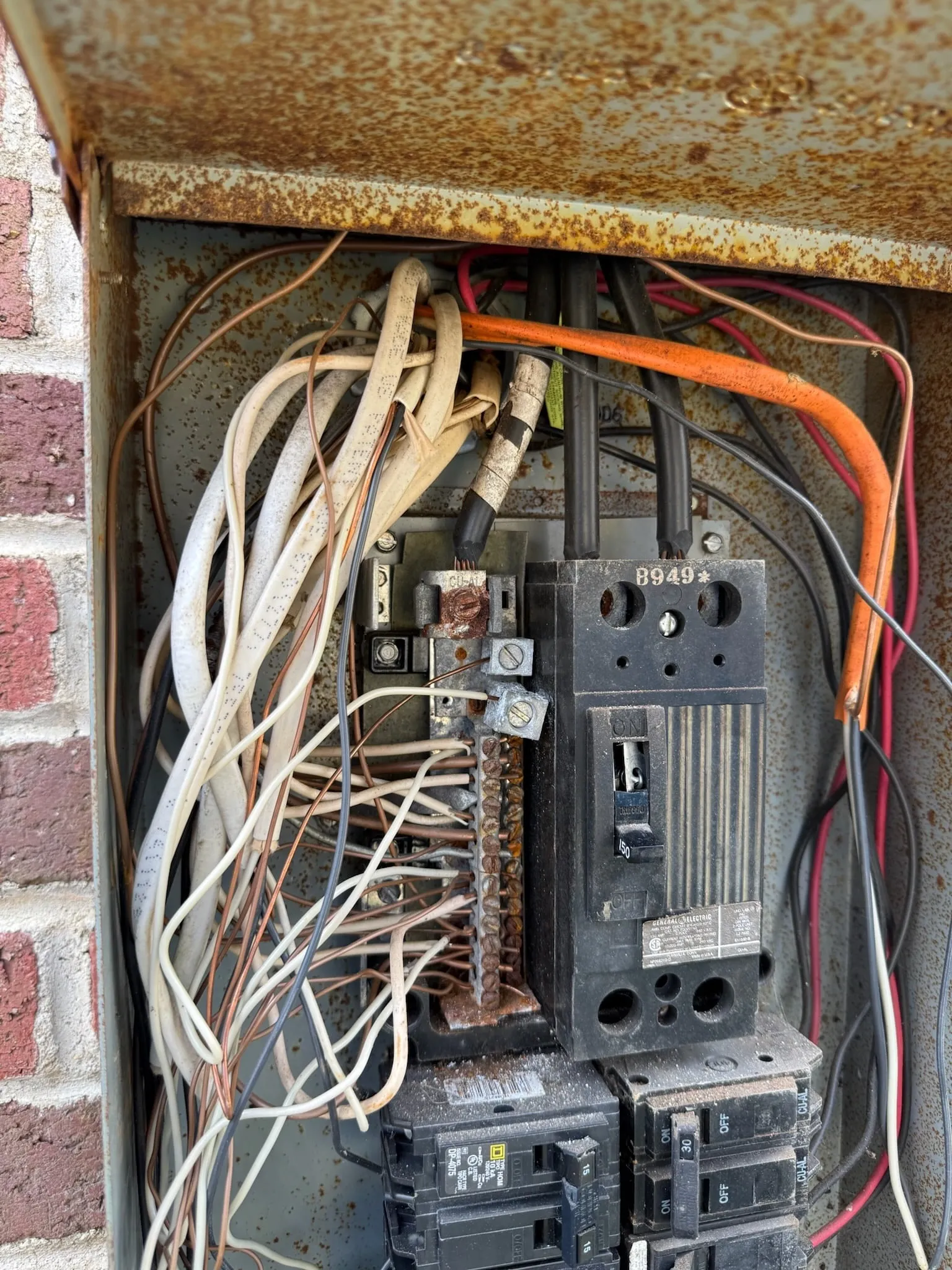
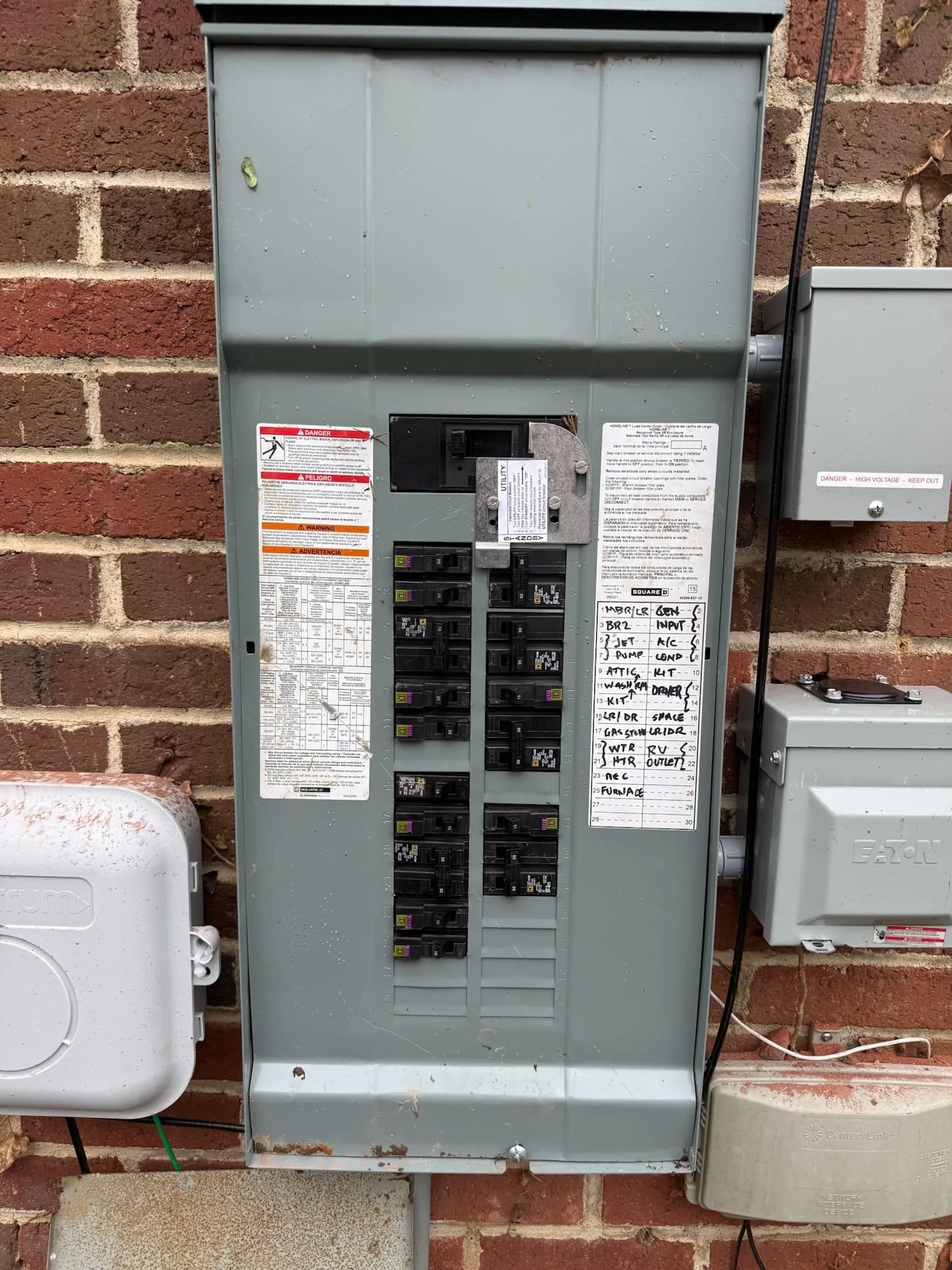
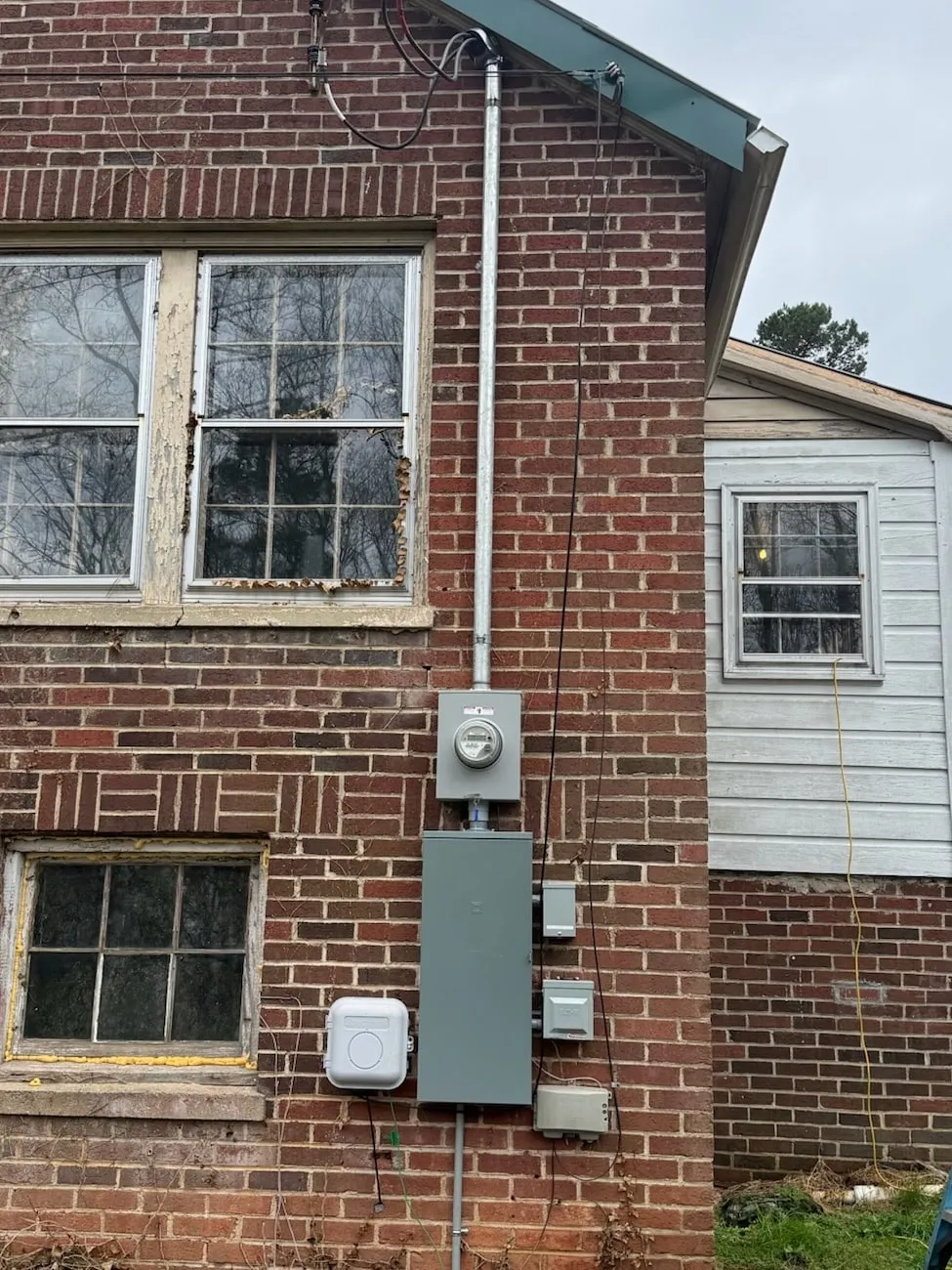
He also wanted somewhere to plug in his RV and a way to hook up a portable generator. So we upgraded the service from 150 to 200 amps, with a new panel, a new meter base and a new riser, the pipe up the side of the house where the power company’s lines connect. We reconnected every existing circuit, added the RV receptacle, and put in a generator input with an interlock: a sliding plate that makes it impossible to have the main breaker and the generator breaker on at the same time.
What makes a panel too small
A house built with a 100-amp panel was wired for the appliances of its day. Many have since gained air conditioning, an electric dryer and an electric range, one at a time. Each one takes a share of what the panel can supply, and you can’t keep adding forever.
What usually pushes it over the limit:
- An EV charger. A Tesla charger draws 48 amps for hours at a stretch. The code sizes circuits for a load like that at 125%, so it needs a 60-amp circuit. In an older house with a 100-amp service, that almost always means an upgrade. In a house with 200 amps, it usually doesn’t. There’s more about this on the EV chargers page.
- A new building or an addition. Power for a shop, a she shed or a new room.
- A worn-out outdoor panel. Rust and weather damage are easy to see, and they’re reason enough on their own.
The size of your service is usually the number on the main breaker. When what you want to add is more than the panel can carry, we go through the load calculation with you, so you can see why.
Federal Pacific panels
If your panel says Federal Pacific or FPE, Nathan’s advice is to replace it: “they are a fire hazard and should be taken care of immediately.” Their breakers plug into the panel with a design the company called Stab-Lok, sold at the time as better than anything else out there. In Nathan’s experience the connections work loose and run hot.
On one job, we worked in a house with an FPE panel from around the 1960s. Its breakers kept failing, and the cause was heat where the loose connections met the panel.
A day without power
Changing a panel means disconnecting everything in the house. Most of the time the service outside needs upgrading too, and then the power company has to pull the meter before we start. The county or town inspects our work before the power company will hook the house back up.
So we do as much as we can the day before. On the day itself, we turn the power off first thing in the morning and aim to have it back on by the end of the workday. Plan on 8 to 12 hours without power. Once in a while a job runs into a second day.
We’re at the inspection ourselves, so if the inspector wants something changed, we can usually correct it on the spot.
Old work has to pass, too
The inspector looks at more than the new panel. If someone changed the wiring over the years without a permit, or did it wrong, it has to be put right before the new work can pass. Most people don’t know to ask about this, so we point out what we see before the job starts, and what it will take to fix.
Older subpanels are a common example. They now need four wires, with the neutral and the ground kept separate. One fed with three wires doesn’t meet that. As Nathan puts it, “it’ll continue to work, but it no longer meets code, and I can’t do it without making it right.”
Room to grow
Before we start, we ask whether you want more capacity than you need today. If an electric car, a shop or a generator is in your plans, it’s worth deciding now. Some of the larger new houses we wire get a 400-amp service.
Every upgrade is priced after we’ve seen it. Whether the panel is inside or out, whether the service outside has to change, and what has to be brought up to code all change the job.
From our Google reviews
“Great experience with Nathan from Morgan Electric, will definitely use him again! Got panel upgrade, RV port, and generator input.”
Other work we do
- Standby Generators & Transfer SwitchesStandby generator installation, transfer switches and generator inputs.
- EV ChargersElectric vehicle charger installation.
- RV PortsRV power hookup installation.
- LightingIndoor, outdoor and commercial lighting, including recessed and color-adjustable LED fixtures.
- Smart Home WiringVideo doorbells, security cameras, smart switches, dimmers and thermostats, smart blinds and network cable, and help setting up the apps.
- New Construction WiringElectrical for new homes and outbuildings, from planning the service to the final inspection.
- Troubleshooting & RepairsTroubleshooting, repairs and preventive maintenance, including service entrance and incoming power diagnostics.
- Electrical InspectionsElectrical inspections for home buyers and hazard surveys for businesses, with infrared scanning.
- Commercial ElectricalElectrical work for businesses and offices, including tenant build-outs.
- Industrial & Motor ControlsLight industrial electrical work, machinery moves, and motor control troubleshooting.
Get a quote
The fastest way is to call. Or send a few details and we’ll get back to you, usually within 4 to 6 hours.
336-990-2332