
New Construction Wiring
New construction is the work Nathan enjoys most. About half of our calls come from builders, and most of those are builders we’ve worked with before.
Working with builders
We don’t advertise for builder work. It comes from relationships. As Nathan puts it, “once you get with a builder that is happy with your work, they like to keep their same subs.”
Decide before the walls close
The cheapest time to add almost anything electrical is before the drywall goes up. Nathan’s advice for a new house: “Think about these things ahead of time, rough them in. That’s the least expensive time to put it in.” He also recommends wiring devices in rather than relying on batteries, the same way smoke detectors are.
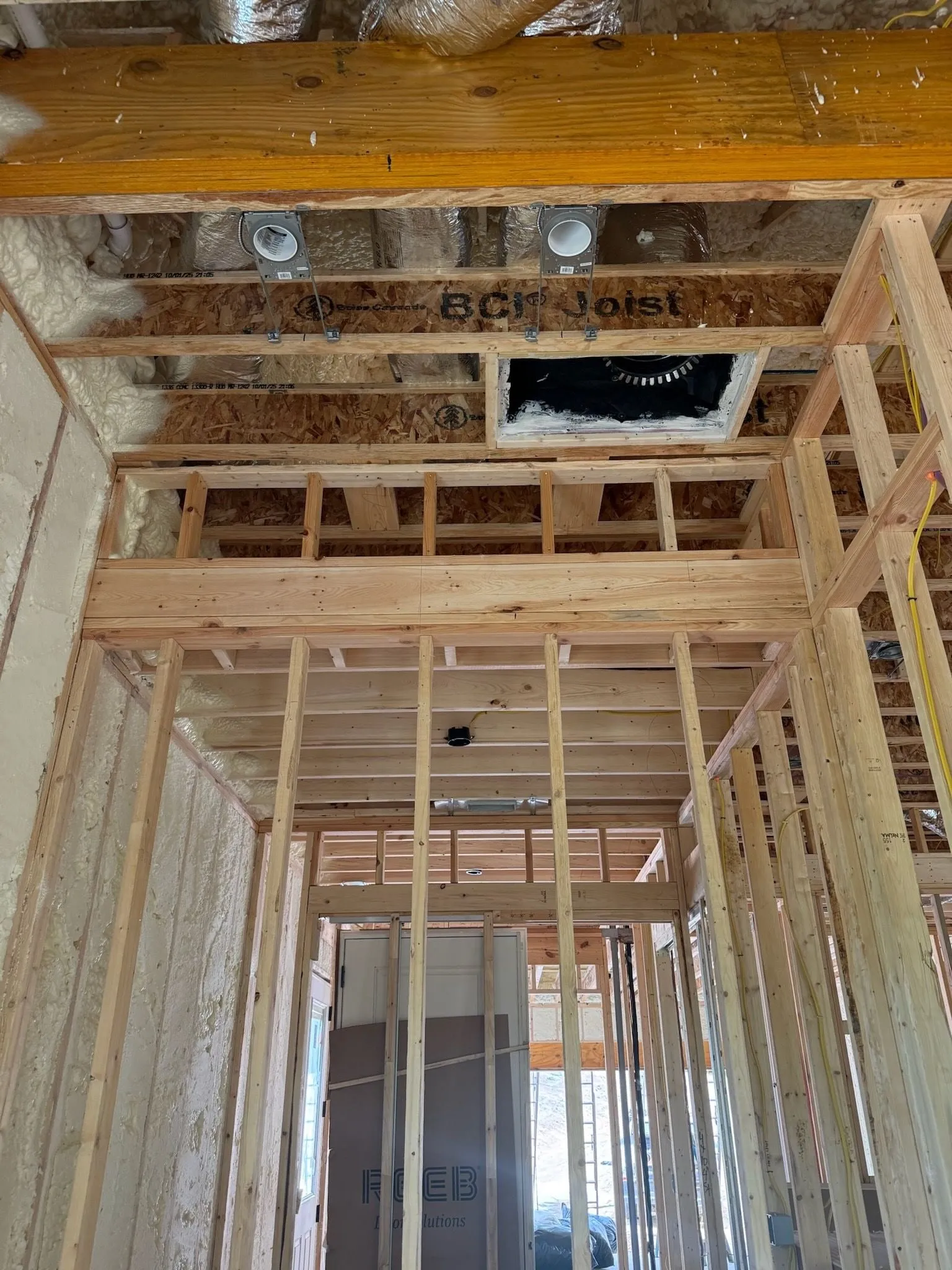
Two houses we wired show what that looks like:
- A house on Hyco Lake, where we supplied and installed a Generac standby generator and transfer switch as part of the house wiring. Nathan is a certified Generac installer. More on our standby generators page.
- A house with 14 motorized blinds, a Ring doorbell and five Ring floodlight cameras, all wired before the walls were closed. More on our smart home wiring page.
Some of the larger houses we wire get a 400-amp service. With that much capacity, adding an EV charger later almost never means an upgrade.
Barns and outbuildings
A barn that houses livestock is its own section of the electrical code, and most people don’t know it applies. Animal waste gives off ammonia, which corrodes ordinary boxes and devices, so the wiring has to be corrosion-resistant: UF cable or jacketed MC cable, and sealed boxes with gland fittings that keep the fumes out. Horses chew, so wiring has to be in raceways they can’t damage. And a concrete floor where animals stand needs grounding and bonding built into the slab, so there’s no voltage difference between the floor and the metal they touch.
One customer we priced a barn for was surprised that any of this applied. It’s much easier to plan for before the slab is poured.
We also run power to workshops and outbuildings, including for people running a small business from a building behind the house.
Planning and design
For work the county doesn’t require engineered drawings for, we do the design ourselves: sizing the service, the panels and the feeders between them, then building it. When a project does need an engineer’s stamp, we don’t have one in-house, but we can put you in touch with the right people.
On a bigger project, Nathan can also act as an adviser. On one church building, he reviewed and oversaw the design without doing the installation himself. After more than 35 years, many of them in leadership roles on large jobs, he knows what to look for before it becomes a problem.
Permits and inspections
We pull the permit and handle the paperwork, for a fee on top of what the county or town charges for the permit itself. Our North Carolina unlimited license lets us pull permits in any county or town in the state that requires one. We’re at the inspections ourselves, so if the inspector wants something changed, we can usually correct it on the spot.
Other work we do
- Panel UpgradesElectrical panel upgrades and replacements.
- Standby Generators & Transfer SwitchesStandby generator installation, transfer switches and generator inputs.
- EV ChargersElectric vehicle charger installation.
- RV PortsRV power hookup installation.
- LightingIndoor, outdoor and commercial lighting, including recessed and color-adjustable LED fixtures.
- Smart Home WiringVideo doorbells, security cameras, smart switches, dimmers and thermostats, smart blinds and network cable, and help setting up the apps.
- Troubleshooting & RepairsTroubleshooting, repairs and preventive maintenance, including service entrance and incoming power diagnostics.
- Electrical InspectionsElectrical inspections for home buyers and hazard surveys for businesses, with infrared scanning.
- Commercial ElectricalElectrical work for businesses and offices, including tenant build-outs.
- Industrial & Motor ControlsLight industrial electrical work, machinery moves, and motor control troubleshooting.
Get a quote
The fastest way is to call. Or send a few details and we’ll get back to you, usually within 4 to 6 hours.
336-990-2332